Reading Machine Documentation
A one-day course for project participants in pharmaceutical projects — the people who sit in the meetings where the drawings are on the table, and who were never taught to read them.

Nobody ever taught them to read the documents
Project participants without a technical background are expected to review P&IDs, wiring diagrams and functional specifications. They comment on them, they approve them, and they carry the consequences when something in them was wrong. Very few have ever been taught how the documents are built or how they hang together.
This is a one-day course that closes that gap. It is written for everyone taking part in a project — project managers, QA and validation staff, planners, production people and engineers alike — and it assumes no engineering background.
One machine, every document type
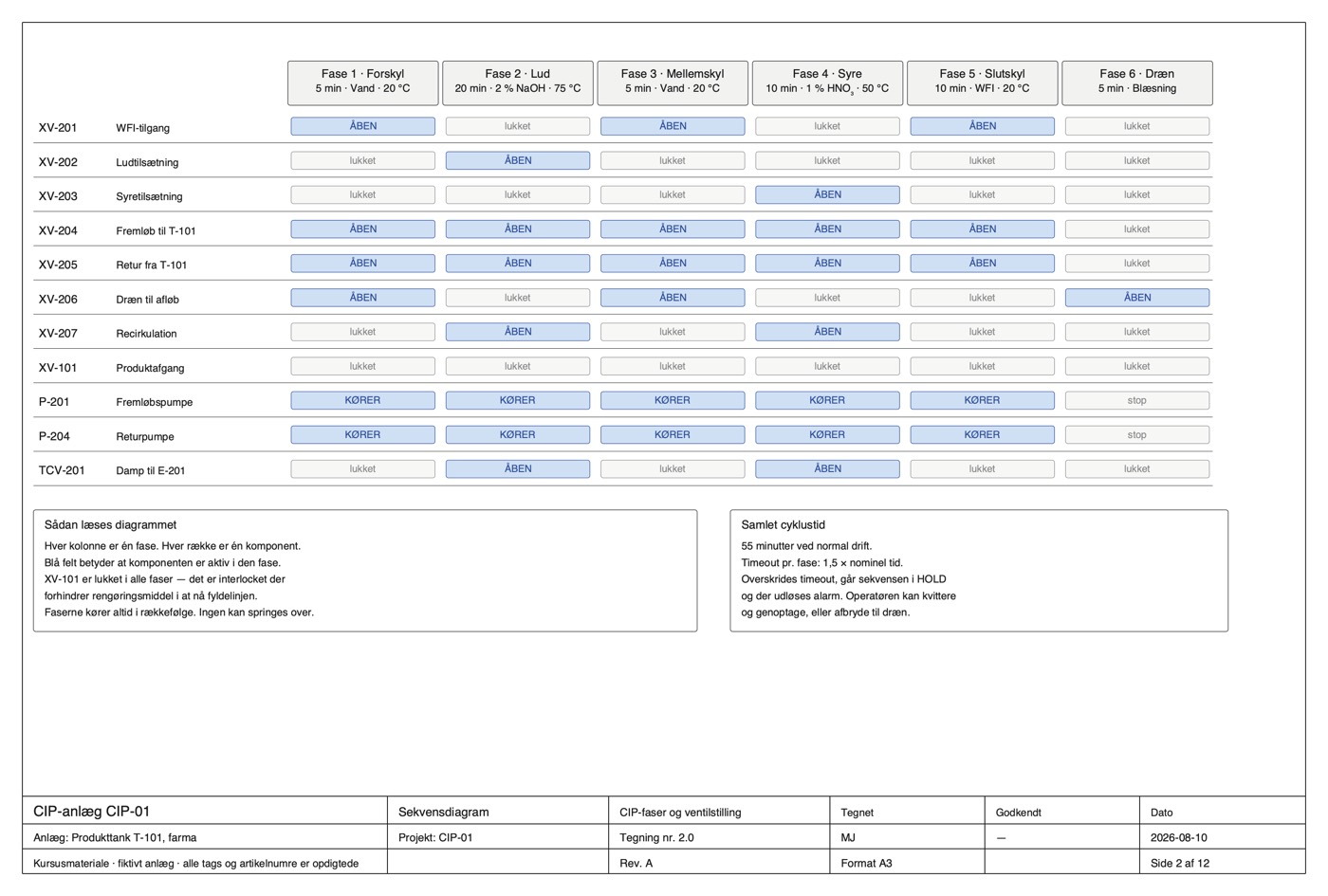
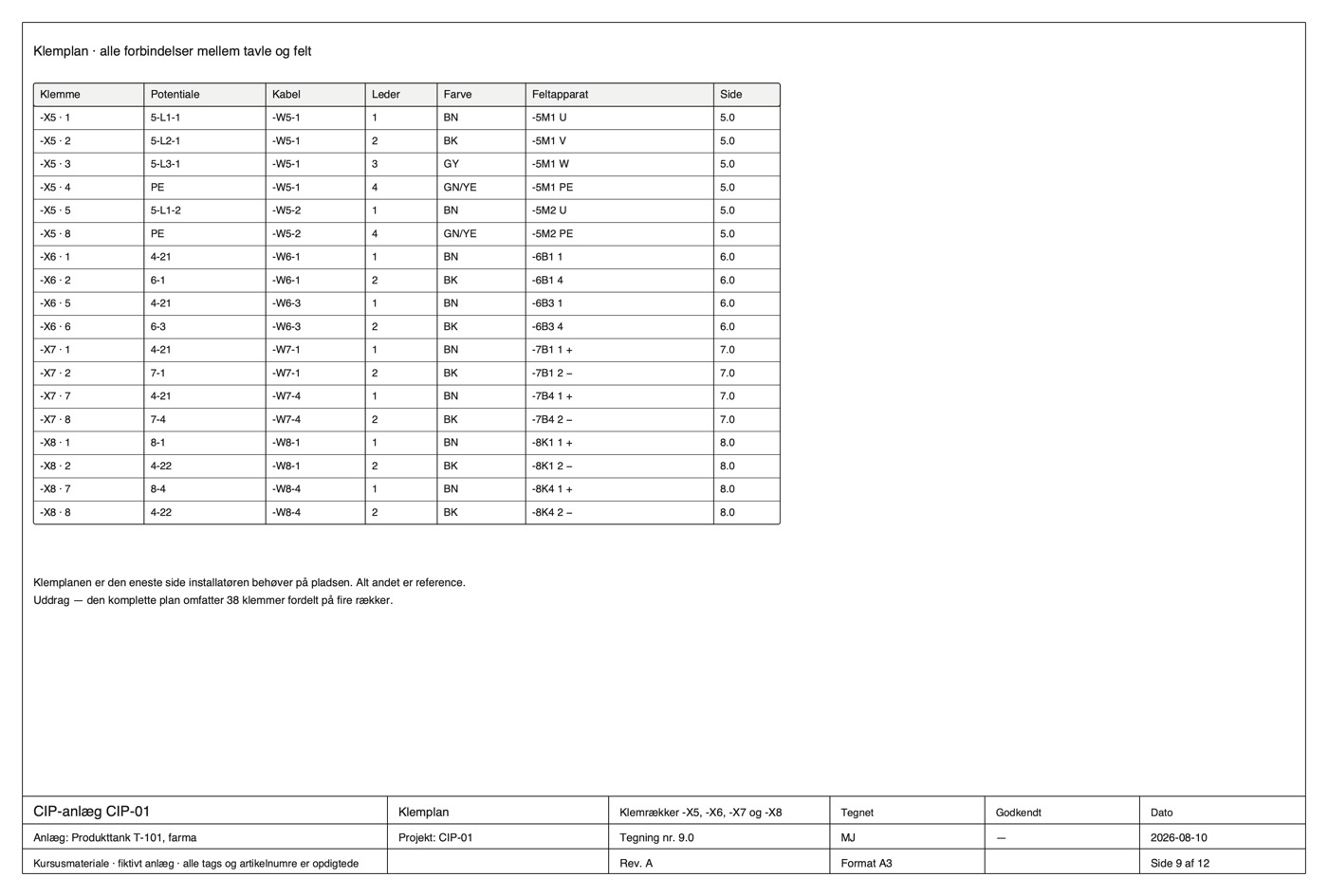
Most training teaches symbols. Symbols are the easy half. The hard half is the connection: the same valve is a symbol on the P&ID, a line in the I/O list, two terminals in the wiring diagram, and a condition in the functional specification — and the real question is whether those four agree.
So the course uses one machine throughout. A cleaning-in-place unit that cleans a product tank between batches, drawn in full: twelve drawings, a functional specification and an exercise book, all describing the same equipment. Change one tag and it has to change everywhere — which is exactly what happens in a real project.
Follow one tag through the whole set
Take the conductivity transmitter AT-201. It is the instrument that decides when the tank is clean enough to stop rinsing. Here is the same device, seen from six documents:
A participant who can fill in that table for any tag can read machine documentation. That is the whole test, and it is what the day builds towards.
Four blocks, half of it hands-on
The basics
Symbols, tag systems and standards. What a P&ID is — and what it is not.
The documents
The same machine in P&ID, wiring diagram, PLC sequence and functional description.
Group work
Participants trace the flow, find errors and explain control loops to each other.
Your own drawings
We go through the material you bring from your own project. Feedback you can use tomorrow.
Five errors, planted on purpose
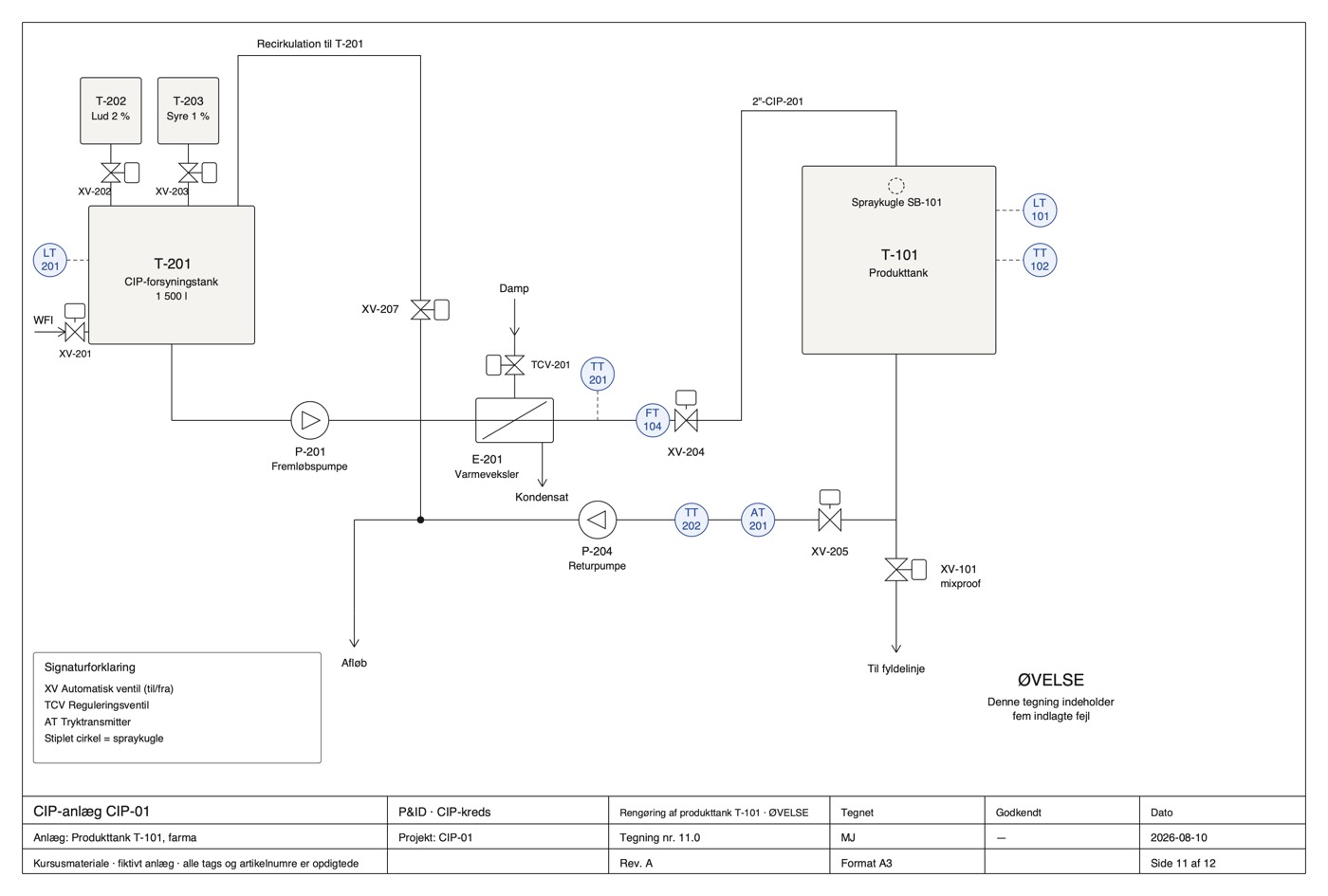
Late in the day each group is handed a P&ID of the same machine containing five deliberate errors — some are drafting mistakes, some are design mistakes.
Four of the five can be found without knowing anything about cleaning systems. You find them by checking the drawing against the other documents, which is precisely the skill the course is about.
Material you can keep using
- The complete document set for the course machine — twelve drawings, functional specification and exercise book — on paper and as PDF.
- Two reference cards from that set: one for process symbols and tag systematics, one for electrical symbols.
- Your notes from the review of the drawings you brought.

Open course or in-house
Open course. One day, 09:00–16:00, lunch included. 6–10 participants from different companies — bring one drawing from your own project.
In-house. A full day at your site, aimed at one department or one project. We work exclusively with your own drawings — the material never leaves your building, so confidentiality is not a concern.
Who teaches it
The course is taught by Carsten Lindestrøm, principal consultant at Lindestrøm ApS, specialising in process and automation.
More than 25 years in pharmaceutical projects. The first part of that was spent on the supplier side — building control systems, panels and operator interfaces, and writing the documents this course teaches you to read. Since then the work has been on the client’s side of the table: specification, design review, FAT, SAT and qualification of the machines other people deliver.
That is where the course comes from. The drawings are written by someone who knows exactly what they mean, and read in the meeting by people who were never taught the conventions. The day is built on having sat in both chairs.
Next open date on request. Call and tell me which project you are on — that is usually enough to say whether the course fits.
Carsten Lindestrøm · +45 2013 1163